EV Charging Reliability Data Shows the Status Light Is Not the Ticket
EV charging reliability data reveals a 28-point gap between reported uptime and real charge success, a lesson every ticket-heavy operation should learn.
AUTHOR

Ralf Klein
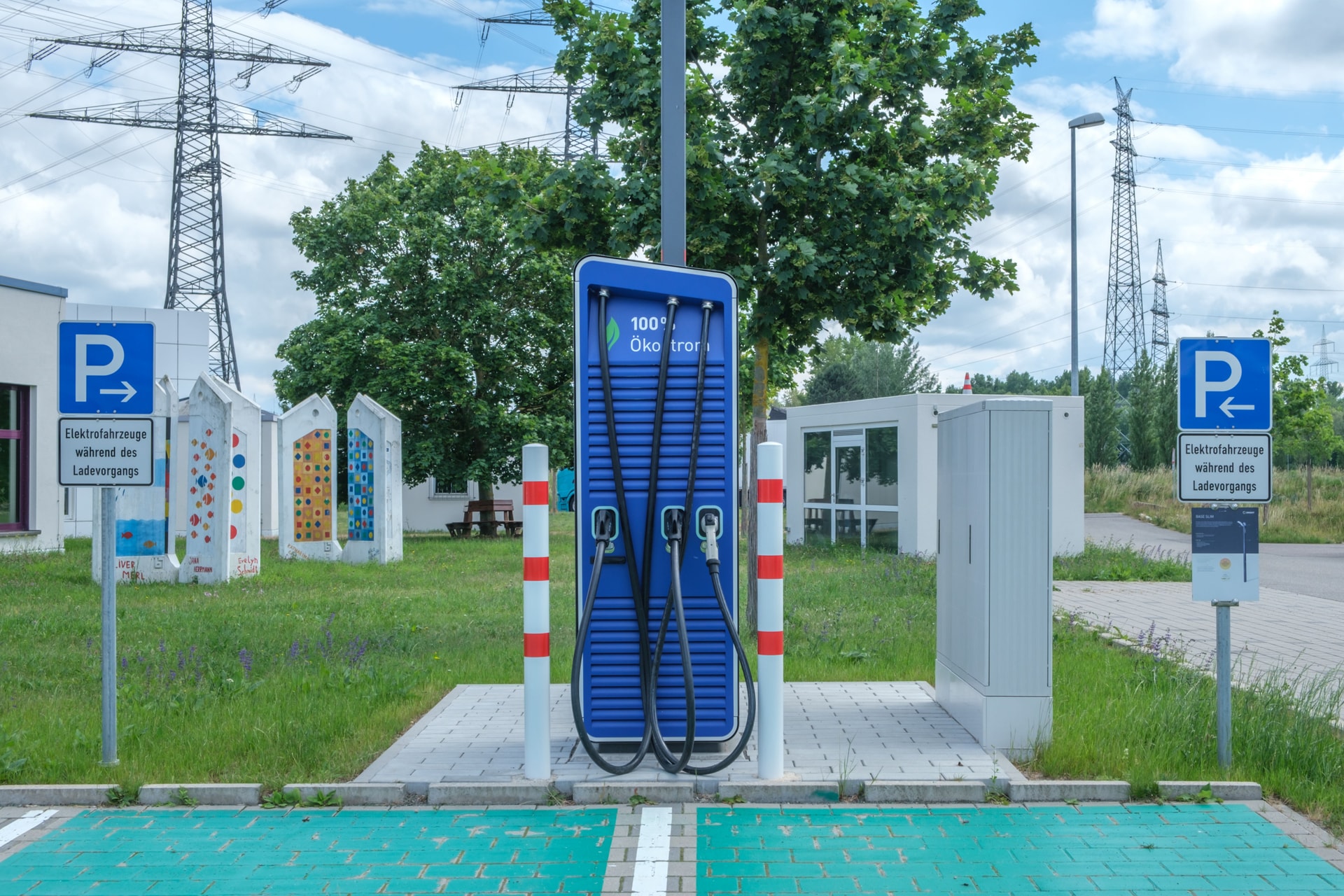
Charging networks report 98.7 to 99.9 percent uptime. Drivers complete only 71 percent of their first charging attempts. Nearly one in three sessions fails on a charger the network's own dashboard says is working.
That gap matters far beyond the parking lot. Zest's 2026 analysis of UK charging data lands on the same week the UK's mandatory 99 percent reliability threshold for rapid chargers became enforceable, yet a 2025 Monta survey of over 200 UK charge point operators found only 3.9 percent currently hit that number. The chargers are not lying. They are measuring the wrong thing. And that is exactly the failure mode that shows up in every ticket-heavy operation once volume outgrows a small team's ability to check work by hand.
The EV Charging Reliability Gap Between Uptime and Success
Uptime measures whether a charger responds to a status ping. It does not measure whether a driver's car actually charged. ChargerHelp's analysis of more than 100,000 charging sessions across 2,400 US chargers found that networks claiming 98.7 to 99.9 percent uptime delivered a first-time charge success rate of just 71 percent. More than a third of those failures happened on chargers that appeared fully operational at the moment of failure.
The UK regulatory picture confirms the same split. Since November 2024, rapid charging networks above 50kW have had to hit 99 percent average annual reliability under the Public Charge Point Regulations, with the first compliance reports due in January 2026. Only 3.9 percent of operators currently clear that bar, even though 74 percent report uptime above 95 percent on their own dashboards. The metric operators are required to report and the metric that determines whether a driver leaves with a charged car are two different numbers, and only one of them is a ticket that needs closing.
Why Reliability Gets Worse, Not Better, With Age
The gap does not stay constant. ChargerHelp's year-over-year data shows first-time charge success rates fall from 85 percent at newly installed stations to below 70 percent by year three, a 15-point decline driven by hardware that was never designed for continuous software updates, firmware that cannot keep pace with changing vehicle charging protocols, and connectors that wear out from repeated physical use.
A separate analysis from Kempower of more than 13 million charging sessions between 2018 and 2024 found that 81 percent of all failures are user-oriented, dominated by failed authentication (75.7 percent of user failures, often caused by confusing charging apps) and cables that were never fully connected (13.8 percent). Only 19 percent trace to genuine technical faults such as EV communication errors or connector locking issues. That distribution is the tell. Most failed sessions are not equipment breakdowns, they are missing information and confusing process, the same pattern that fills a property manager's maintenance queue with tickets that stall because nobody captured the unit number, the access code, or a photo of the fault before dispatching a technician.
What Closes the Gap: Acting on the Fault, Not Just Detecting It
The operators narrowing the gap between reported uptime and actual success are not the ones with better hardware. They are the ones who turn every fault into a tracked, resolved action instead of a status flag. Industry data on service operations at scale shows that second-line remote diagnostics teams now resolve over 40 percent of faults without ever dispatching a technician, and predictive maintenance platforms that flag component degradation before failure are cutting downtime by up to 73 percent.
None of that works if the fault stays a dashboard color. It only works when every anomaly, connector fault, cable fault, network dropout, or power electronics warning, gets routed, triaged, and actioned as a discrete ticket with an owner and a resolution state. Zest reports that only 17 percent of UK operators can access key diagnostics on demand, and 10 percent rarely or never receive diagnostic updates at all. Most of the industry is still watching a light, not running a ticket queue.
The Cost of Leaving a Fault Undetected on a Dashboard
Mean time to repair shows how wide this gap actually gets in practice. Best-in-class operators resolve faults in under five hours. Typical DC fast charger repairs, by contrast, can stretch to several weeks once a technician dispatch is needed and parts availability becomes the bottleneck, according to the same 2026 UK reliability data. Every week a fault sits undispatched is a week the uptime dashboard can still show green while the charger delivers nothing.
The regulatory backdrop makes the stakes concrete rather than abstract. The UK's Public Charge Point Regulations carry penalties of up to £10,000 per charge point for non-compliance and up to £250,000 for false statements to enforcement bodies, while the US NEVI Formula Program sets a comparable 97 percent uptime floor for federally funded chargers, measured per port rather than across a network. For fleet operators, industry surveys indicate many cannot absorb a charging failure that is not resolved within four hours before it cascades into missed routes and schedule disruption. A false "available" status is not a rounding error on a compliance report, it is a missed delivery window, a stranded fleet vehicle, or a driver who quietly switches to a competitor's network.
The Same Failure Mode Runs Through Every Ticket-Heavy Operation
Swap "charger available" for "maintenance ticket resolved" and the pattern is identical to what shows up in customer service queues that measure deflection instead of resolution. A chatbot that answers a question is not the same as an agent that creates the work order, checks it against technician capacity, and confirms the job actually got done. A charger pinging "available" while a driver cannot start a session is the same category of false positive as a support ticket marked closed that generates a callback three days later.
The fix is not a faster dashboard. It is operational AI agents that sit inside the actual system of record, whether that is a charge point management platform, a property management tool, or a facility work-order system, and take the next action automatically: log the fault, classify its severity, dispatch the right resource, and close the loop only when the underlying job is verifiably done. The same discipline that closes the gap in EV networks is already proving out in distributed physical assets like vending fleets running predictive maintenance against real work orders, where a fault code becomes a dispatched, tracked job rather than a flag nobody actions until a customer complains.
Practical Takeaway
If your operation reports a headline reliability number, ask a harder question before you trust it: what percentage of your reported "resolved" or "available" status actually reflects a verified outcome, not just a system state that flipped back to green? For property managers, facility teams, and fleet operators running distributed physical assets, the discipline that closes a 28-point reliability gap in EV charging is the same discipline that closes a maintenance backlog: capture the missing information at intake, route every fault as a trackable ticket with an owner, and measure the completed job, not the dashboard color.
Reported uptime is a claim. A completed charge, like a completed repair, is a verified outcome. Operators who confuse the two will keep missing a threshold they think they are already meeting.
Want our articles in your Top Stories?
BLOG
Other insights
 InsightsSep 24, 2026AI Leasing Assistant: Stop Losing Leads After HoursAn AI leasing assistant cuts response times by over 90% and handles multi-channel intake 24/7. Here is what the 2026 data says about leasing operations.
 InsightsSep 9, 2026Automated Ticketing System: Fix Triage FirstMost automated ticketing systems handle routing well but leave triage to humans. Learn why AI belongs on the judgment layer in maintenance queues.
 InsightsAug 27, 2026Facility Management AI Work Order Automation Cuts BacklogFacility management AI work order automation removes manual handoffs between intake and dispatch. Here is what the 2026 data says about where the hours go.