Five Tenants Report One Broken Boiler. Duplicate Maintenance Requests Are the Gap in Your AI Intake.
Duplicate maintenance requests turn one broken boiler into five work orders. Most property AI skips the dedup layer. Here is how to build one.
AUTHOR

Ralf Klein
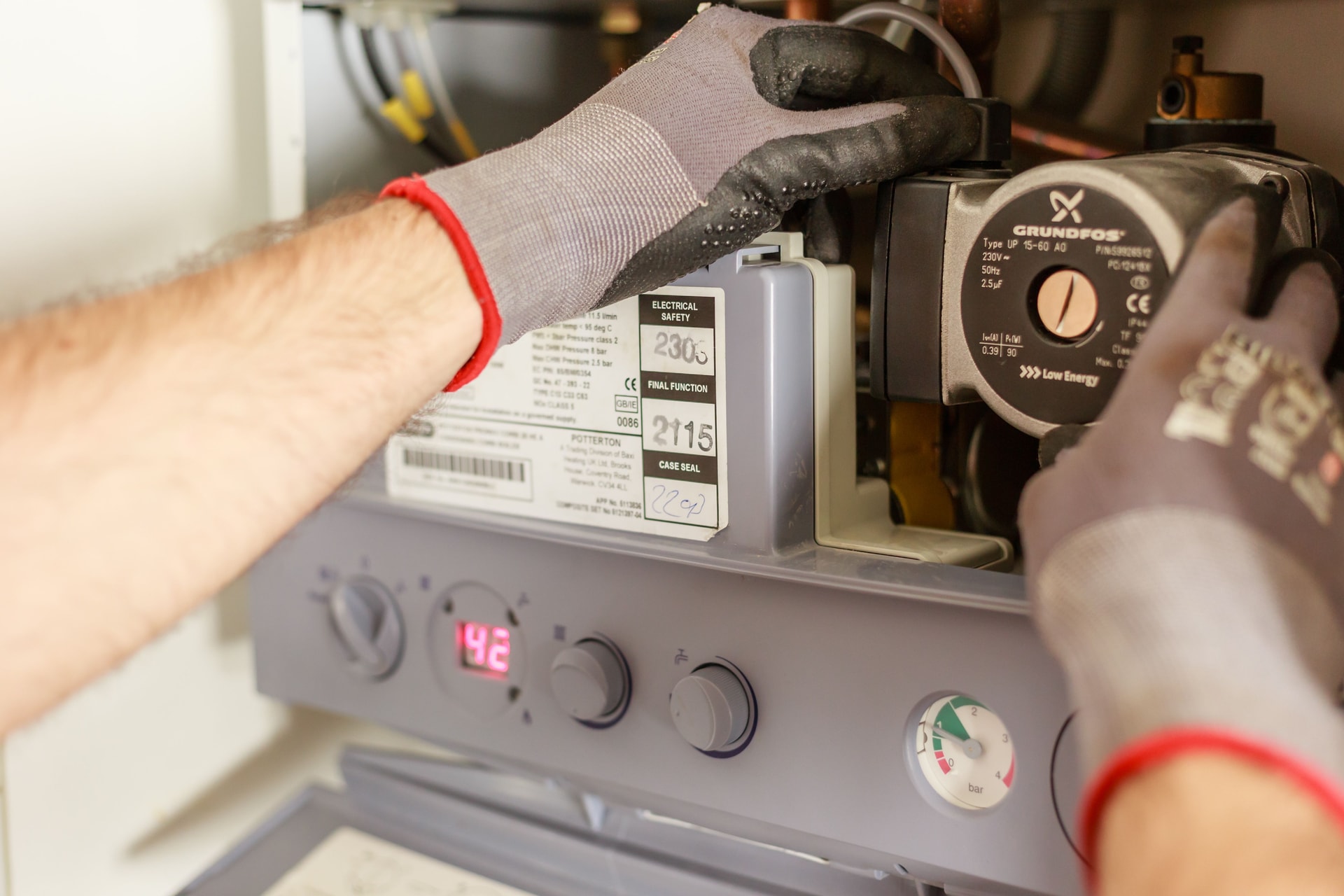
One boiler fails in a forty-unit building on a cold Tuesday morning. By 09:15, nine tenants have reported it: four on WhatsApp, three by email, two through the portal. An AI agent that classifies every message correctly will still do the wrong thing, because each message is, on its own, a legitimate ticket. It opens nine work orders, schedules against several of them, and a coordinator spends the next hour merging the mess by hand while the heating contractor calls in confused about three separate job numbers for the same machine. This is not a rare edge case. Aquant's 2025 Field Service Benchmark Report found that 14 percent of truck rolls, one in seven onsite visits, are unnecessary. Duplicate work orders are one of the quietest ways that number grows.
The industry is automating intake fast. Buildium's 2026 industry report puts AI adoption among property management companies at 58 percent, up from 20 percent a year earlier. Most of that investment goes into taking requests in: chatbots, guided forms, voice agents, WhatsApp lines. Cleaner intake does reduce some duplication indirectly, because a structured form captures a unit number where a voicemail did not. But very few systems actually match incoming requests against each other. Standardizing tickets and deduplicating them are different jobs, and the second one is usually missing.
Why Duplicate Maintenance Requests Multiply as Intake Improves
Here is the uncomfortable mechanic: every channel you open is a new front door for the same event. Offering tenants WhatsApp, email, phone and a portal is the right move, and it is exactly what a modern multi-channel intake layer is built to do. But when a building-level asset fails, each channel produces its own version of the incident. The WhatsApp message reads "no heat 3rd floor??". The email is a forwarded thread from a partner who first wrote to the old office address. The portal entry is a neatly structured form filed under the wrong category because the tenant guessed. Same boiler, three artifacts that share almost no surface features.
Language multiplies the problem. The US Census Bureau reports that nearly 68 million US residents speak a language other than English at home, and European portfolios are no different. In one portfolio we work with, maintenance intake runs in Dutch, English, Polish and Romanian side by side. "Geen verwarming", "no heating" and "nie ma ogrzewania" are the same fault, but no string comparison will ever say so. Duplicate maintenance requests are not a data hygiene problem you can solve with a cleaner form. They are a matching problem across channels, languages and phrasing, and they peak at exactly the worst moment: the morning a shared asset dies and the whole building reaches for a phone. If intake also breaks the work order downstream, the damage compounds, which is why naive translation breaks the work order in the same way naive intake breaks the queue.
IT Operations Solved This a Decade Ago
Property management does not have to invent the answer. IT operations teams faced the identical topology years ago: one root cause, a storm of signals. When a database node fails, hundreds of monitors fire at once, and nobody expects an engineer to handle each alert as a separate incident. The AIOps category grew around collapsing that storm. BigPanda's event correlation documentation describes a utility, WEC Energy Group, reaching 98.8 percent alert deduplication, and recommends aiming for a 70 to 85 percent compression rate as the practical sweet spot, because perfect compression starts merging things that should stay apart.
Translate the pattern to a portfolio and it maps one to one. The building is the infrastructure. The boiler is the failing node. The tenants are the monitors, each firing an alert in their own format and language. The correlation layer's job is to recognize that nine signals describe one event, open one incident, and keep every reporter subscribed to its status. IT operations learned a second lesson worth stealing: deduplication happens before action, not after. Nobody dispatches nine engineers and then reconciles. The collapse happens between signal and incident, which for a property operation means between intake and work-order creation. That slot is exactly where most property AI stacks have nothing at all.
The Build Pattern: Asset Plus Symptom Plus a Rolling Time Window
The dedup layer that holds up in production clusters requests on a composite key: the asset (or the best available guess at it, from building and unit), the symptom class, and a rolling time window. Nine "no heat" reports from one building within six hours are a cluster. The same report three weeks later is a new fault. The window should breathe with the symptom: hours for an outage-type failure, days for something like a slow leak that tenants notice gradually.
Matching cannot run on raw text, for the reasons above. The workable approach is to normalize first: intake extracts structured fields (building, unit, asset, symptom, urgency, language) from every channel, and similarity is scored on those fields rather than on prose. This is also why dedup belongs in the same layer as AI maintenance triage rather than bolted on later: the classification work triage already does is the input dedup needs. Matches above a high confidence threshold collapse automatically into one parent work order, with every reporter attached so status updates fan out to all nine tenants, in their own language, without anyone chasing.
The hard part is the middle of the confidence curve, and this is where a human belongs in the loop. Two failure modes are not symmetric. A missed duplicate costs a merge later and possibly a wasted visit. A false merge is worse: the "duplicate" that was actually a second fault, the tenant in unit 4 whose radiator valve failed the same morning the boiler did, gets their ticket silently absorbed and nobody comes. Aquant's data shows what a wrong dispatch decision costs: a failed first visit adds roughly two extra visits and two weeks to resolution. So the threshold should be set conservatively, gray-zone matches should route to a coordinator as a one-click merge-or-split decision, and every merge needs an audit trail that records what was collapsed, when and by whom or by what. That single review queue is minutes of human work per week, against hours of manual reconciliation the morning it matters.
What to Measure Before Winter
The practical move is to treat deduplication as its own pipeline stage with its own two metrics: the collapse rate (how many incoming requests merged into existing clusters) and the false-merge rate (how many merges a human later split). If you cannot see those numbers today, you have no dedup layer, whatever the intake vendor's brochure says. Run the test on your last heating season's data: pick the coldest week, count tickets that reference the same building and symptom within 48 hours, and you have your duplicate rate. Operators who do this for the first time are rarely under 10 percent for building-level assets in peak weeks.
The payoff shows up in two ledgers at once. Buildium's same 2026 report notes that 93 percent of property management companies saw expenses rise last year, and every avoidable dispatch feeds that line. On the other side, 40 percent of renters who are unsure about renewing say better maintenance would keep them. What a tenant experiences from a well-built dedup layer is not the clustering logic. It is that they reported no heat at 07:40, got a confirmation that the fault was known, and received the same repair-time update as their neighbors, instead of silence because their ticket was the one a coordinator deleted at 11:00.
The morning a boiler fails is the exam your intake system did not know it was taking. Nine answered tenants is not the passing grade. One work order with nine names attached is.
BLOG
Other insights
 InsightsApr 17, 2026Bloxs and AI: Why Tenant Communication Is the Biggest Untapped Win in Property ManagementHow Bloxs users are combining AI to automate tenant communication, and what the data shows about adoption rates, ROI, and what actually works.
 InsightsApr 13, 2026Anthropic Built an AI That Found 3,000 Zero-Day Vulnerabilities. Then They Refused to Release It.Claude Mythos scores 93.9% on SWE-bench and found 3,000+ zero-days including a 27-year-old OpenBSD bug. Anthropic won't release it publicly.
 InsightsApr 10, 202672% of Tenants Leave Over Response Time, Not the Repair ItselfAI responds to maintenance tickets in 3 minutes. Property managers take days. Data shows this response gap drives 72% of tenant non-renewals.