Insights
/
Cold Acquisition That Works in 2026
Cold calling in 2026 is no longer about volume but real connection. Learn how to combine email and LinkedIn to personalize outreach, build trust, and start meaningful B2B conversations that lead to results.
/
AUTHOR

Ralf Klein
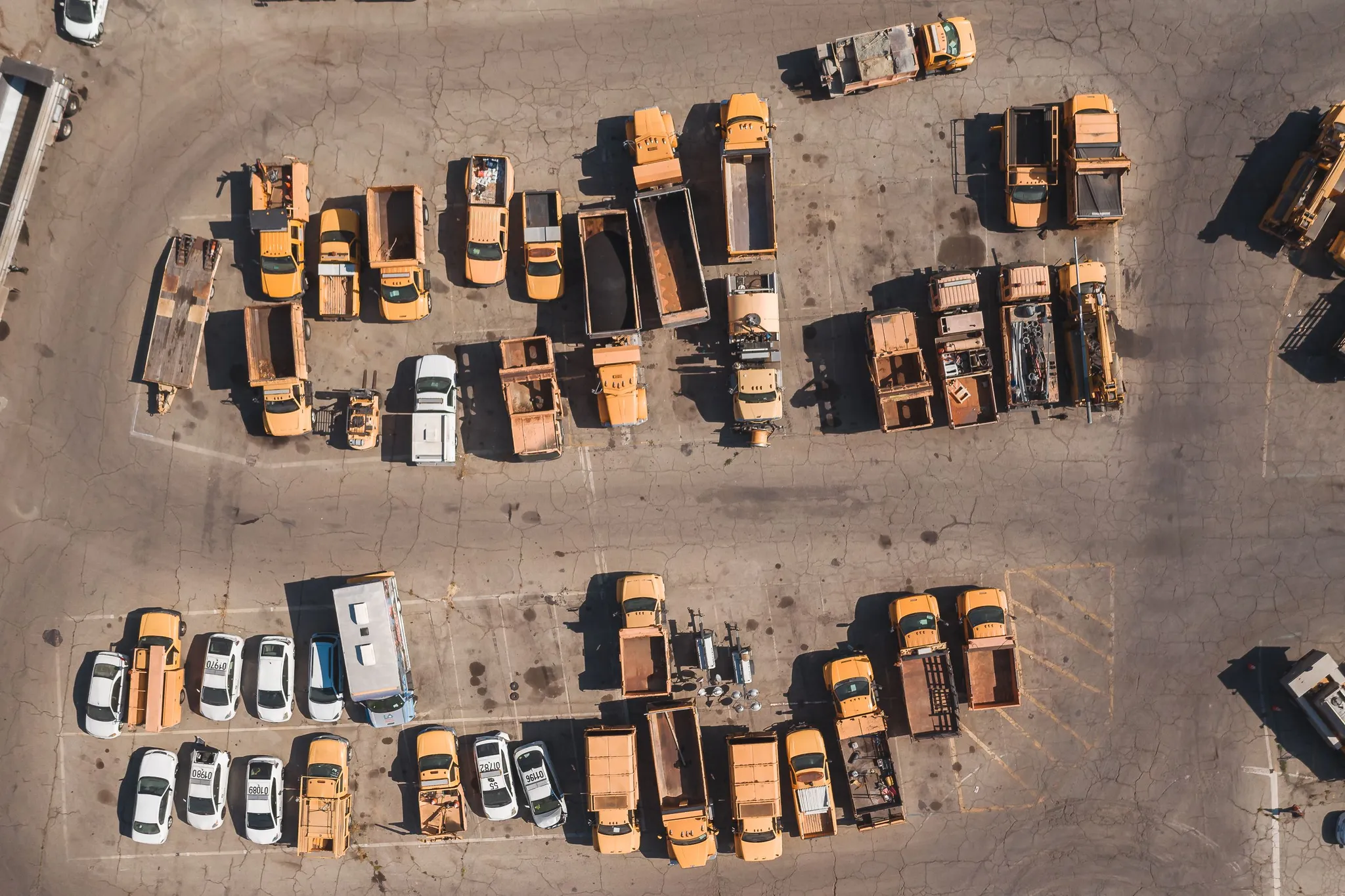
Every minute a vehicle sits waiting for a work order to be opened is a minute it is not generating revenue. Fleet maintenance software already captures the fault code, the driver defect report and the PM schedule. The data is there. The problem is the gap between the data arriving and a human reading it, deciding it is urgent, and opening or approving the work order. That gap is not a technology failure. It is a workflow design failure, and it is costing fleets in ways that rarely appear on a single line of a P&L.
This article is about that gap, why it persists even in well-resourced fleet operations, and what closing it operationally looks like in practice.
Fleet Maintenance Software Already Has the Signal. The Bottleneck Is Human Triage
Modern fleet maintenance platforms ingest data from multiple sources simultaneously. Geotab's fleet maintenance solution pulls fault codes directly from vehicle ECUs, flags severity levels and links them to PM schedules in a single dashboard. Fleetio's vehicle issue management captures driver-submitted defect reports from DVIRs and surfaces them alongside open work orders. The data aggregation problem, for most mid-to-large fleets, is largely solved.
What is not solved is the handoff. A fault code hitting a dashboard at 06:14 on a Tuesday is only actionable when a fleet manager or maintenance coordinator opens their queue, reads the alert, assesses priority against everything else in the queue, and decides to open a work order. That assessment step is human, it is sequential, and it does not run at 06:14. It runs when the person arrives, clears their inbox, and gets to the maintenance queue. In a distributed fleet with vehicles across multiple depots, that delay compounds across every asset and every shift.
The result is a class of downtime that does not show up as a mechanical failure. It shows up as a vehicle that was available, had a logged fault, and sat idle while the paperwork caught up. Operations leaders who track wrench time versus total shop time will recognise this pattern immediately. The vehicle is not broken. The workflow is.
Driver Reports and Fault Codes Are Two Separate Queues That Should Be One Dispatched Action
There is a second layer to this problem. Fault codes and driver defect reports typically live in different parts of the platform, or arrive through different channels, and they are not automatically correlated. A driver submits a DVIR noting a brake pull. The telematics system logs a fault code on the same vehicle two hours later. A maintenance coordinator looking at each queue in isolation may not connect them. A coordinator who is managing 40 vehicles across three depots almost certainly will not connect them in real time.
Fleetpal's DVIR defect workflow illustrates the structural challenge: defects are captured, categorised and held for review. The review step is still manual. The question is not whether the data exists. The question is whether the organisation has built a process that acts on correlated signals without waiting for a human to do the correlation.
This is precisely where operational AI agents change the architecture. An agent that monitors incoming fault codes and DVIR submissions can apply a rule set or a trained model to determine whether two signals on the same vehicle within a defined time window should trigger an automatic work order, route it to the correct technician, and flag it for supervisor review rather than supervisor creation. The supervisor is still in the loop. They are reviewing a dispatched work order, not deciding whether to create one. That is a fundamentally different workload.
The same logic applies to PM schedules. A vehicle approaching its service interval does not need a human to notice the mileage counter and open a work order. The counter crossing the threshold is the trigger. The work order creation and technician assignment can be automatic. The fleet manager approves or adjusts. They do not initiate.
The Distributed Asset Problem Makes the Gap Worse at Scale
Fleet operations share a structural characteristic with other distributed asset categories: the assets are not in one place, the people responsible for them are not always co-located with them, and the volume of incoming signals grows with the size of the fleet. A property management company managing 200 units faces the same triage problem with maintenance tickets that a fleet operation faces with fault codes. The signal volume exceeds the human capacity to process it sequentially without delay.
Triad has documented this pattern in property management, where AI ticket automation reduced response times materially by removing the human triage step from routine ticket creation. The fleet context is structurally identical. The asset generates a signal. The signal requires a work order. The work order requires a human to open it. The human is a bottleneck. Removing that bottleneck for routine and rule-based cases, while keeping human judgement for exceptions, is the operational AI move.
For EV fleets, this becomes more acute. Battery fault codes, charging session anomalies and range degradation alerts arrive continuously. The volume of signals per vehicle is higher than for a conventional diesel asset. A fleet maintenance software stack that was designed around a human reading a daily fault summary is not architected for a fleet where every vehicle is generating telemetry every few minutes. The triage gap widens as the signal density increases.
The answer is not to hire more coordinators to read more alerts. The answer is to build an agent layer that handles the routine dispatch and surfaces only the exceptions. That is not a technology bet on AI. It is a workflow design decision that happens to use AI as the execution layer. The distinction matters because it changes how you scope the project. You are not deploying AI. You are redesigning a workflow and using an agent to run the parts that do not require human judgement.
What Closing the Gap Actually Looks Like in Practice
The operational change is narrow and specific. You are not replacing your fleet maintenance software. You are adding an agent layer that sits between the data the software captures and the work order queue a human currently manages. The agent monitors incoming fault codes and DVIR submissions, applies a priority ruleset, correlates signals from the same vehicle within a configurable time window, and creates or drafts work orders that route to the correct technician and queue for supervisor approval rather than supervisor creation.
The custom integrations required to connect an agent to an existing fleet maintenance platform are not trivial, but they are well-defined. Most platforms expose APIs or webhooks. The agent reads from those endpoints, applies logic, and writes back to the work order system. The fleet manager's interface does not change. The volume of items waiting for their attention decreases, and the items that do reach them arrive pre-triaged with correlated context rather than as raw alerts.
The approval step does not disappear. It moves later in the process and becomes a review of a prepared action rather than a decision about whether to act. For fleet operations managing more than 30 vehicles, that shift in workload structure is the difference between a coordinator who is reactive and one who is managing by exception.
If you have already seen this pattern in property maintenance, where AI-driven maintenance ticket automation cut response times by removing the manual triage step, the fleet application is the same logic applied to a different asset class. The signal is a fault code instead of a tenant complaint. The work order is a repair dispatch instead of a contractor booking. The bottleneck is the same human approval step sitting between a captured signal and a dispatched action.
Fleet maintenance software has already solved the data capture problem. The next problem is the workflow gap between captured data and dispatched action. That gap is not a feature request for your software vendor. It is a process design question, and the answer is an agent layer that closes it without replacing the humans who need to stay in the loop for the decisions that actually require judgement.
/
BLOG
Other insights

Insights
/
Aug 11, 2026
Bloxs and AI: Why Tenant Communication Is the Biggest Untapped Win in Property Management

Insights
/
Apr 13, 2026
Anthropic Built an AI That Found 3,000 Zero-Day Vulnerabilities. Then They Refused to Release It.

Insights
/
Apr 10, 2026